Why Bone Marrow Keeps Coming Back
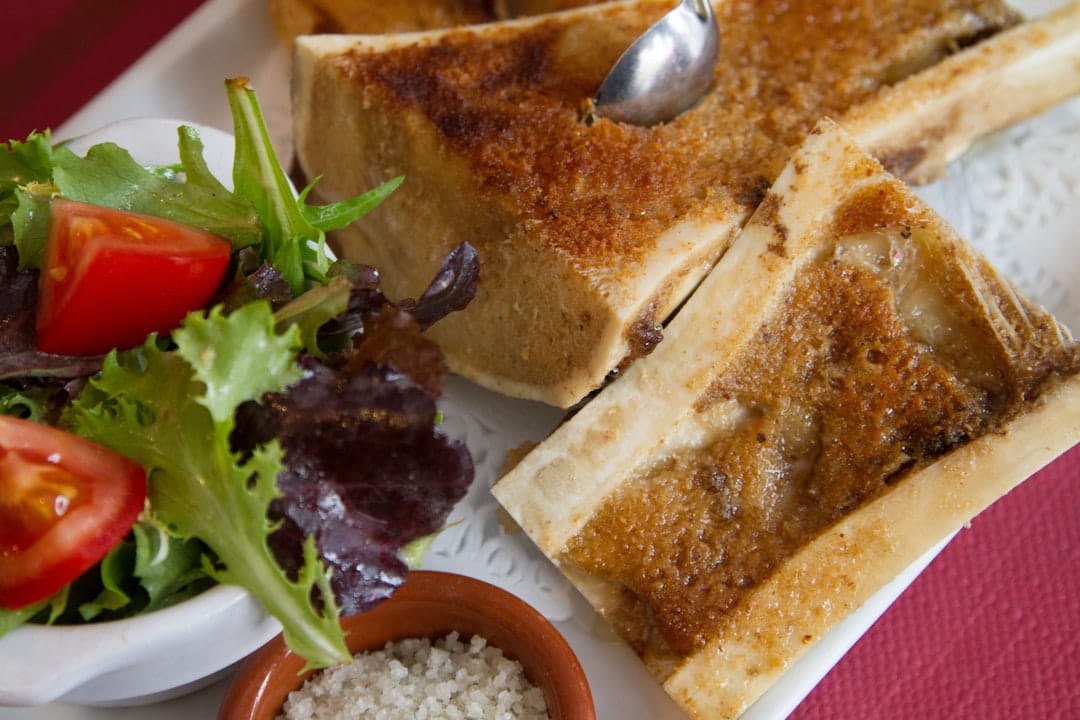
I was standing in the walk-in at a place I used to work when I cracked open a roasted marrow bone for the first time. The steam rose up, and there it was: that first spoonful, warm and custardy on a piece of grilled bread. Fifteen years on the line will teach you plenty, but that moment stuck with me. It explained why some things never quite disappear.
Bone marrow has always had a place in the serious kitchens. You could find it in French bistros, paired with a simple parsley salad and shallots, or simmered into stocks that gave a depth no shortcut could touch. Fergus Henderson and the nose-to-tail folks in London made the point clear: this wasn't just about flavor. It was about using the whole animal, the parts most places tossed aside.
By the 2010s it had settled into a certain role, the indulgent starter you ordered instead of committing to a full steak. Then the plant-heavy shift came on strong after 2020, and for a stretch it felt like anything from an animal was fading out. But it never really vanished. And lately it seems to be finding its way back onto menus, not with fanfare but as something familiar.
The texture is what does it: silky and buttery when it's warm, almost melting before you chew. It takes well to a crisp slice of toasted ciabatta, or the sharp lift of chimichurri. At one spot in San Diego they keep it straightforward with smoked salt. In Palm Beach they pair it with oxtail jam, the sweetness cutting through the fat. In Philly it's roasted plain, waiting for you to swipe bread through whatever runs out.
It's turning up in more places than you'd expect, from steakhouses down to home kitchens on social media, where people roast the bones for twenty minutes and finish them with garlic, scallions, or chili crisp. Plenty of us already know it well, and the numbers show menu appearances climbing. There's the nutrition side too, collagen and vitamins, good fats that taste like something real.
For restaurants it's practical, a high-margin cut that's basically a byproduct, less waste in tight times. For the rest of us it's a bite of comfort that feels a little special after a stretch of lighter options. Of course the questions come up about sourcing, grass-fed or otherwise, because that matters more these days.
You'll see attempts to mimic it with plant-based fats, but it's hard to match the real thing. And the flavors keep traveling. A soy-glazed version in New Orleans, Korean barbecue notes showing up in videos, one idea traveling fast to the next city. What keeps drawing me back is how straightforward it is. Not the main event most of the time, just something that asks you to pause for a moment, spoon in hand, the bone still warm on the plate. It reminds you that good eating has always been about embracing a few things fully.
After all the swings in what we're told to want, this one feels steady.