The Quiet Becoming of Prince Edward County
I find myself thinking about the quiet morning I spent in Picton, in that hotel room with the window that wouldn't quite shut. The breeze off Lake Ontario carried that particular damp cold you only get in early spring, the kind that seeps through glass and makes you pull a blanket tighter around your shoulders. I was there because everyone else was starting to talk about the place—Condé Nast had put it on some list, and you know how that goes. But the noise hadn't quite reached that little corner of The Royal Hotel yet.
What I noticed first, before the wineries or the farm-to-table menus, was the light. It's different there, softer somehow, filtered through the lingering mist off the lake and bouncing off all that limestone bedrock. They say that's what gives the wines their character, that ancient seabed the whole peninsula sits on. I'm no geologist, but standing in the parking lot of Traynor Vineyard later that day, watching the low clouds scrape across the vines, it made a kind of sense. The ground felt solid, old.
The thing about a place getting popular is that you start looking for the cracks, the seams where the performance might show. In PEC, those seams felt more like the natural grain of the wood. At Bocado, the Spanish restaurant in Picton that everyone mentions, the chef came out to apologize because they'd run out of the padrón peppers. 'The shipment got held up,' he said, with a shrug that seemed to encompass all the minor logistical dramas of running a restaurant on a peninsula hours from a major city. We ate fried cauliflower instead, dusted with smoked paprika, and it was better than any pepper could have been.
I met a woman at Closson Chase who'd moved from Toronto during the pandemic, bought a few acres, and was trying her hand at growing lavender. 'The soil's all wrong for it, really,' she told me, leaning against her car as we both waited for the winery to open. 'But isn't that half the fun?' Her hands were stained with earth. That's the energy there—not a slick rebranding, but a collective, slightly stubborn decision to try things. To plant vines where maybe you shouldn't, to open a restaurant in a converted general store, to make sparkling wine in a climate better known for snow.
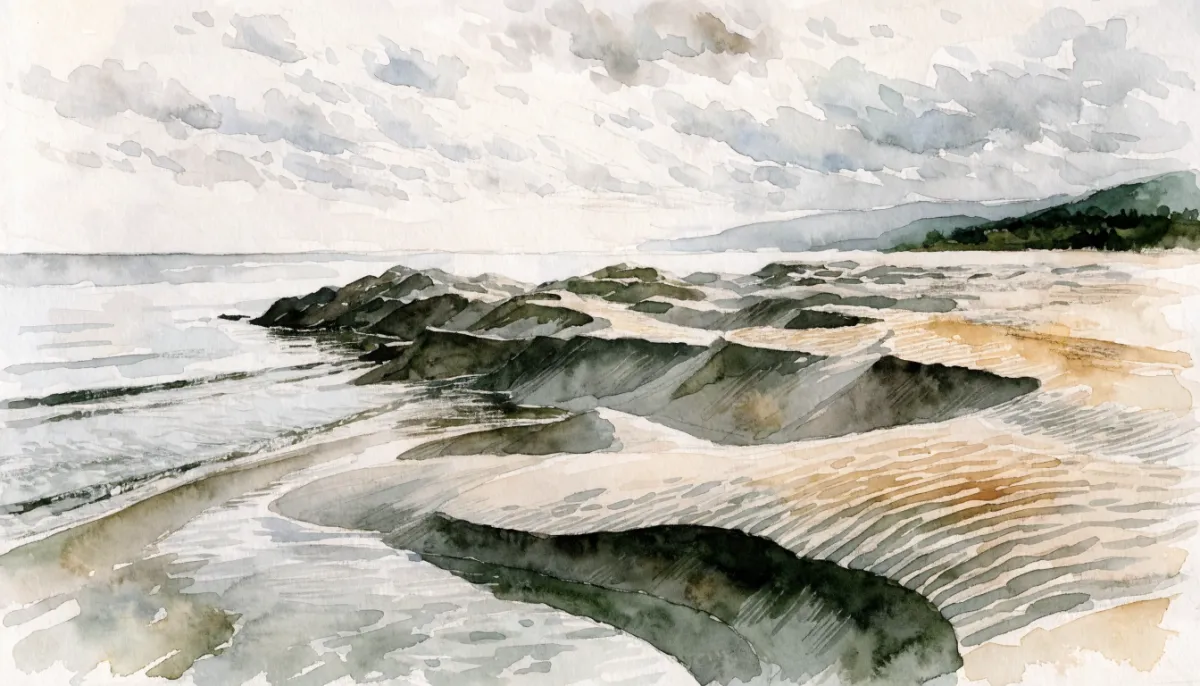
Later, I drove out to Sandbanks, the famous beach. It was too cold to swim, and the parking lot was nearly empty. The dunes rose up like frozen waves, pale gold against the grey water. A single dog chased a stick its owner threw, the bark echoing in the quiet. I thought about how this same spot would be packed in July, towels jostling for space, the air thick with sunscreen and shouted conversations. But right then, it was just wind and sand and that immense, quiet lake. It felt like catching the place in a deep breath, holding it before the exhale of summer tourists.
That's the tension, I suppose. The County's been a weekend secret for Torontonians and Montrealers for years—a place to escape to, not be seen in. Now the world's looking. They've built stylish hotels like The Royal and Wander the Resort, places with heated bathroom floors and cocktail menus that reference foraged sumac. They deserve the attention; the food at places like Theia or Stella's Eatery is genuinely thoughtful, the product of chefs who moved here to cook for the land, not just the trend.
But what stayed with me wasn't the perfect meal or the elegant glass of Chardonnay. It was that morning chill, and the woman with the lavender, and the way the light fell at four in the afternoon, turning the vineyards a hundred shades of gold and grey. It was the sense of a place in the middle of becoming something, aware of the eyes on it, but still, fundamentally, just a piece of land surrounded by water. A place where you can still get a little lost, turn down a dirt road and find nothing but a weathered barn and the sound of your own tires on gravel. The lists will come and go, but that limestone bedrock isn't going anywhere. And maybe that's the point.