That X-76 Designation Caught My Eye the Other Morning
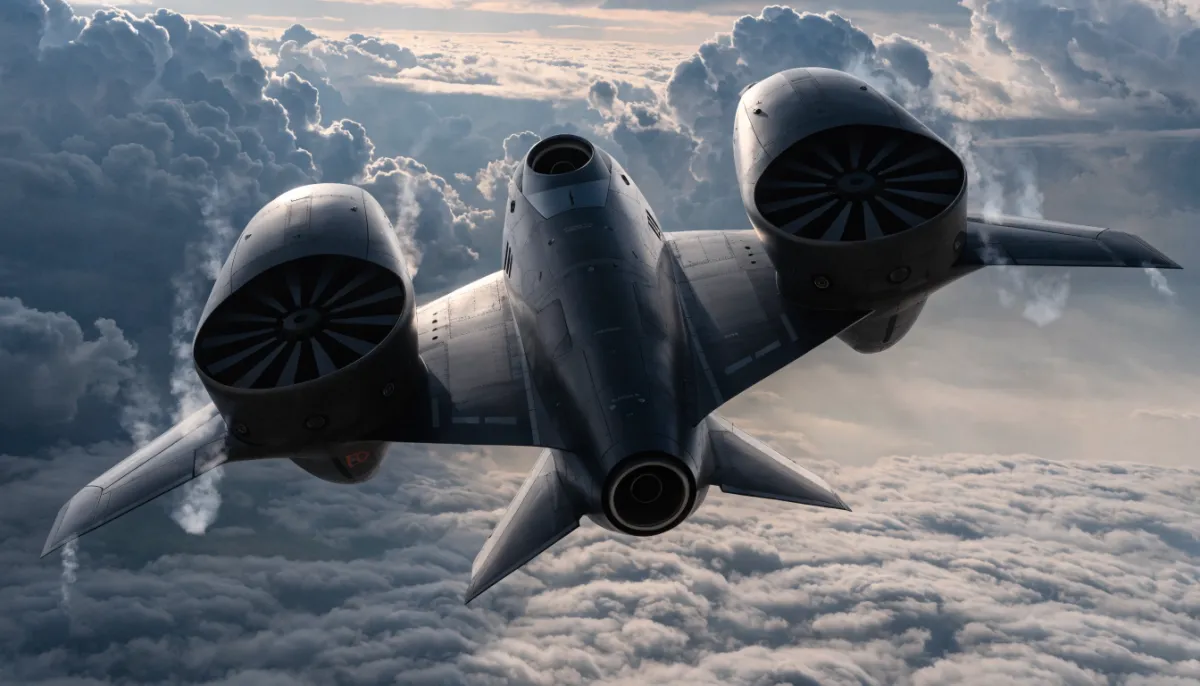
I was scrolling through some fresh DARPA announcements the other morning when the X-76 designation popped up, and it immediately pulled me back to those old conversations about what vertical lift could become if it ever broke free from the speed trap. The agency, together with U.S. Special Operations Command, has been running the SPRINT program to build something that hovers like a helicopter but cruises like a jet, without needing a runway at either end. Bell Textron just cleared its critical design review and is now starting to build the actual demonstrator, officially tagged the X-76.
The core trick here is what they're calling a stop-fold rotor system. In hover or low-speed flight the proprotors work like a traditional tiltrotor, driven by turboshaft engines. Once you hit around 150 to 200 knots, the blades stop, feather, and fold back into streamlined nacelles while the propulsion shifts over to turbofan or jet thrust. At that point the wings take over the lift and the aircraft can push past 400 knots. It's clever on paper. The transition has to be seamless, or you end up with a very expensive glider in the middle.
Bell has a long history with this kind of boundary-pushing work, stretching back through the XV-3 and XV-15 experiments that eventually fed the V-22 Osprey. This feels like the next logical chapter, only now they're chasing significantly higher cruise speeds while keeping the ability to set down on rough ground. The program moved through concept and preliminary design, Bell got picked for the build phase, and they're aiming for first flight tests around early 2028. That timeline feels ambitious but not impossible given how much ground testing they're packing in first.
What really stands out isn't just the performance numbers but the operational shift it could enable. Right now commanders face a constant trade-off: send something fast that needs prepared strips, or something flexible but slow that leaves troops exposed longer. The X-76 idea, at least at the demonstrator level, tries to collapse those two worlds. Think rapid insertion into places where airfields are either nonexistent or too dangerous to use, then quick extraction or resupply at jet-like speeds. The demonstrator itself is uncrewed, but the technologies are meant to scale across crewed and larger platforms later.
Of course, folding blades at speed introduces new failure modes, and the propulsion handoff between turboshaft and turbofan adds complexity that will have to prove itself in real air. DARPA's program manager, Cmdr. Ian Higgins, has been clear that they're after options, not guarantees. Still, watching Bell turn the drawings into metal feels like one of those moments where you can almost see the next chapter of tactical airlift writing itself. Whether it scales cleanly or hits unexpected snags in testing is the part I'll be keeping an eye on.
Either way, the X-76 is a reminder that aviation's old compromises aren't necessarily permanent.