Solid-State Batteries Poised to Power the Next Generation of EVs and Robots
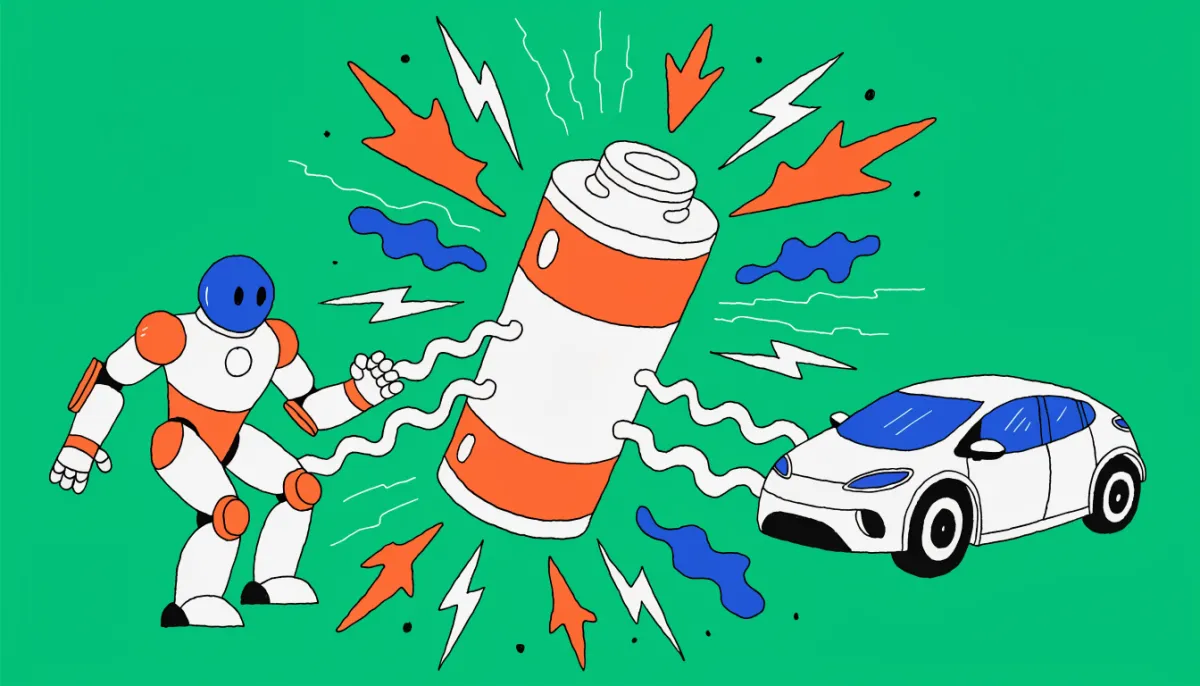
Samsung SDI pulled back the curtain at InterBattery 2026 on a pouch-type all-solid-state battery sample developed specifically for physical AI applications like humanoid robots. The unveiling, part of a broader showcase themed "AI Thinks, Battery Enables," signals accelerating momentum in solid-state technology that could reshape not only electric vehicles but also the emerging robotics industry and beyond.
Key Developments from Samsung SDI and Chery
Samsung SDI aims to complete product verification in 2026 and begin mass production in the second half of 2027. The pouch-type design targets needs for higher power output, enhanced safety, and compact form factors suited to robots that must move dynamically without overheating or catching fire. The company has also shown prismatic solid-state cells aimed at EVs. \n\nMeanwhile, Chinese automaker Chery is moving even faster on the vehicle side. It unveiled a prototype solid-state battery last year with a claimed cell-level energy density of 600 Wh/kg using an in-situ polymerized solid electrolyte and lithium-rich manganese cathode. Chery plans to deploy this technology in vehicles under its Exeed brand as soon as this year, with models like the Liefeng targeting ranges up to 1,500 km, including impressive performance in extreme cold down to -30°C.
Why It Matters: Implications for EVs, Robots, and Energy Transition
Solid-state batteries replace the flammable liquid electrolyte in conventional lithium-ion cells with a solid material. This promises roughly double the energy density - with targets around 500 Wh/kg at the cell or pack level - faster charging, significantly longer cycle life, and far better safety. \n\nFor EVs, that could translate to 600-mile ranges in practical packages or much quicker charging times without compromising longevity. For humanoid and industrial robots, the combination of high energy density, safety, and power delivery is critical: these machines need to operate for extended periods while performing physically demanding tasks. The technology also holds potential for urban air mobility, data center backup, and other high-reliability applications. \n\nIndustry analysts project the global solid-state battery market could grow at compound annual rates between 33% and 57% through the mid-2030s as these benefits align with surging demand for both electric vehicles and AI-powered robotics.
Remaining Challenges
Despite the excitement, significant technical and manufacturing hurdles remain. Solid electrolytes must maintain stable interfaces with electrodes over thousands of charge cycles, especially under mechanical stress or temperature variations. Manufacturing processes are complex and currently expensive, making scaling to automotive-grade volumes difficult. \n\nSkepticism persists in online communities about whether claimed densities and timelines will hold up in real-world production. Many announced "solid-state" batteries in the near term may actually be semi-solid or hybrid designs. Full commercialization for mass-market EVs is more realistically targeted for the late 2020s or early 2030s, with initial deployments likely limited to premium vehicles and specialized robotics.
Future Outlook
The convergence of solid-state battery progress with the rise of humanoid robots and the continued electrification of transportation creates a compelling tailwind. Companies like Samsung SDI, Chery, Toyota, BYD, and others are investing heavily, supported in China by government-backed roadmaps and collaboration platforms. \n\nIf the remaining engineering challenges can be solved at scale, solid-state batteries could become the foundational energy technology for an AI-augmented physical world - powering safer, longer-range EVs and giving robots the reliable, high-density energy they need to work alongside humans. The next few years of pilot production and real-world testing will determine how quickly that vision materializes. \n\nImage needs: Photo of Samsung SDI pouch-type solid-state battery sample on display; diagram comparing solid-state vs liquid electrolyte cell structures; rendering of a humanoid robot with overlaid battery pack visualization; Chery/Exeed vehicle with range graphics.
Sources
- SAMSUNG SDI Unveils All-Solid-State Battery for Physical AI
- Samsung SDI to Unveil Pouch-Type Solid-State Battery at InterBattery 2026
- Chery to launch first electric vehicle with solid-state battery
- South Korean battery makers charge up InterBattery 2026 with solid-state push
- Global Solid-State Batteries Market Research 2026-2036