Nuwa's Quiet Robot Is Trying to Make Livestock Farming Less of a Guessing Game
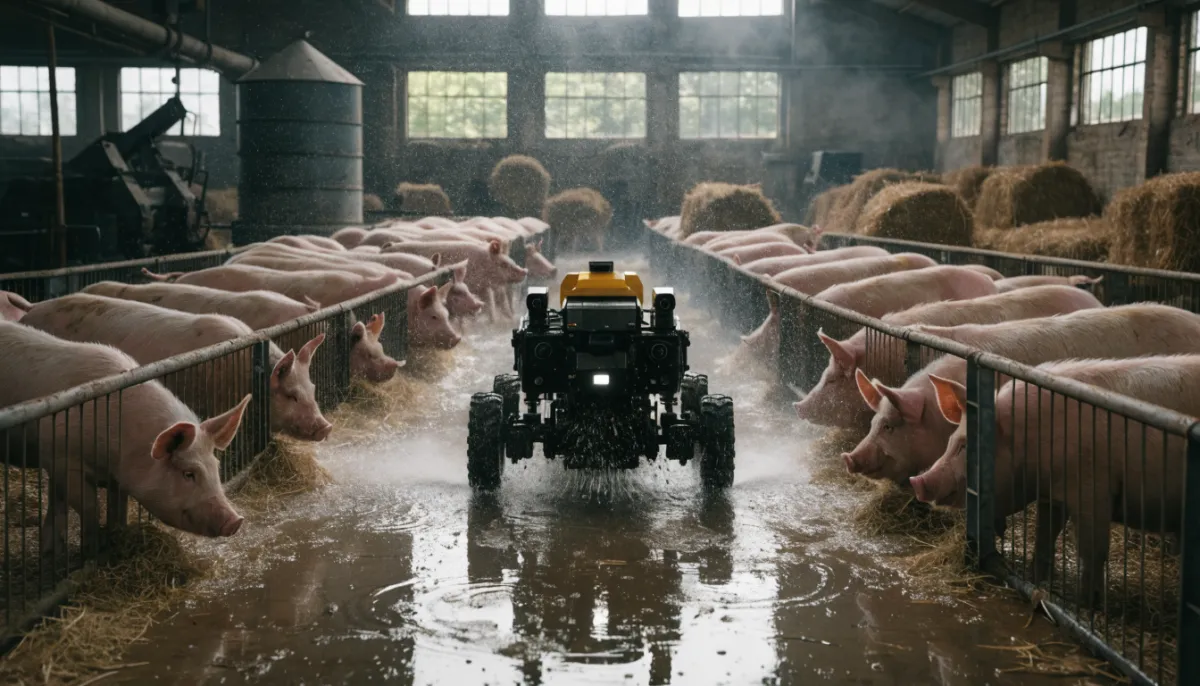
I was scrolling through some early-morning tech alerts the other day when a press release caught my eye. Not because of flashy robot arms or self-driving tractors, but because it quietly admitted something obvious: one of the dirtiest, most labor-heavy corners of farming still runs on tired backs and guesswork. The company is Nuwa Agricultural Technology, a Chinese startup barely three months old. What they're putting out is a small, tough little machine that cleans livestock pens while keeping an AI eye on the animals living in them.
Picture it navigating the tight, messy spaces of a pig barn in rural China—places where traditional automation has always struggled. It doesn't just scrub and disinfect on a schedule. Its sensors and vision system watch how the pigs move, how they eat, whether they're huddled or suddenly lethargic. Spot something off—early signs of illness, a hygiene risk—and it flags an alert, generates a work order, even adjusts its own cleaning route for the next pass. The hardware is only the visible part. What Nuwa is really selling is the loop: robot collects data, software turns it into insights, that data sharpens the model for tomorrow. Founder Andy Luo calls it building an intelligent operating system for the whole farm, not just bolting AI onto one chore.
It feels like a practical evolution, not some sci-fi disruption. Livestock farming, especially in dense setups, has lagged behind the rest of ag-tech for good reason. Barns aren't neat factory floors. Labor shortages hit hard everywhere, from the American Midwest to Chinese provinces, and disease outbreaks can still wipe out herds before anyone notices. Nuwa starts with the jobs humans hate most—cleaning under pressure—then layers in observation that actually scales. Over time the farm ends up with a dataset it never had before, so decisions move away from “what the old hand remembers” toward something measurable. Real friction remains, though. Will farmers trust the alerts enough to act? How much does the subscription analytics actually cost once you’re past the hardware? And how well will this adapt beyond the compact Chinese pens it was built for?
Still, the timing feels right. Food security pressures are rising, and biosafety stays on everyone’s mind after the last few global scares. Anything that quietly cuts antibiotic use by catching problems early has real legs. I keep thinking about my grandfather’s small dairy operation—manual everything, constant low-level worry. A machine like this wouldn’t have replaced him, but it might have given him data he could actually use instead of just sore muscles and gut feeling.
The bigger shift could sneak up on us. What starts as a cleaning bot might quietly turn every livestock barn into a sensor-rich environment, feeding larger models on animal welfare, feed efficiency, even climate resilience. I’m not ready to call it revolutionary. I’ve seen too many ag-tech pilots gather dust in the corner. But if Nuwa can ship something that works in the real muck without constant hand-holding, it might nudge the whole sector a little closer to the data-driven future it keeps promising.