Lines Snaking Past the Parking Garage
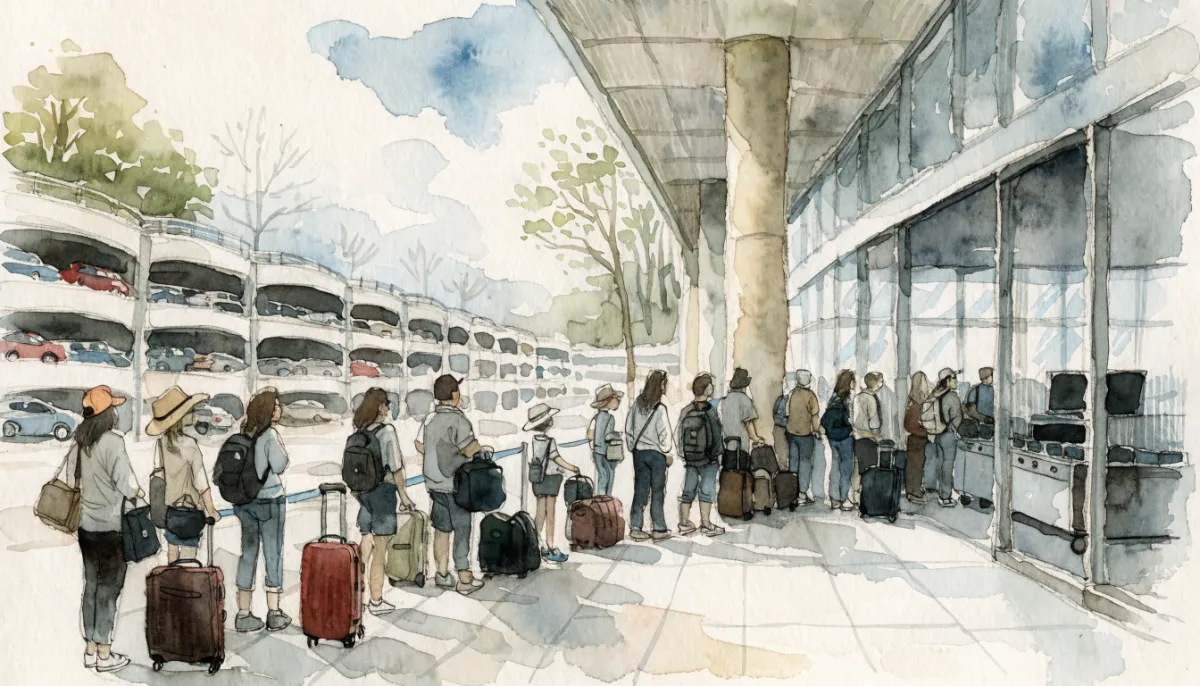
At Houston Hobby Airport last week, the security line spilled out of the terminal and into the parking garage. Travelers posted photos of families standing for three hours while spring break flights waited on the tarmac. Similar scenes played out in New Orleans and Atlanta, where call-out rates among TSA officers climbed above thirty percent at some checkpoints. The immediate trigger was straightforward enough: a partial government shutdown that began in mid-February over an immigration dispute had left roughly fifty thousand security officers without a full paycheck.
What began as a political standoff in Washington reached terminals across the country at the worst possible moment. Passenger volumes were climbing toward their March and April peaks, with the travel industry projecting more than 170 million flyers in those two months alone. Officers earning around thirty-five thousand dollars a year started missing work at five times the usual rate. More than three hundred have simply quit. Those who remained described using food banks, selling plasma, and taking second jobs while still showing up to screen bags under increasing pressure.
The uneven pattern of disruption raises its own quiet questions. Some airports using private screening contractors, funded through pre-existing contracts, reported stable operations while federal checkpoints nearby buckled. Others simply benefited from lower traffic or better local management. Yet the national average absence rate hovered near ten percent, and Transportation Secretary Sean Duffy warned that small airports could face outright closures if the situation worsened after the next missed payday. TSA acting officials echoed the concern, noting their workforce was "fully stretched."
The human cost sits alongside the operational one. Screeners are not highly paid civil servants with large savings cushions. Unions called the situation reckless, pointing out that aviation security had become a pawn in a larger fight involving ICE reforms and broader DHS funding. Airlines added their voices, with executives from major carriers urging Congress to resolve the impasse. Meanwhile, some smaller airports began accepting donations of food and gift cards for their staff. The back pay that federal workers are legally owed after a shutdown eventually arrives, but that promise does little to cover rent due this month.
Beneath the immediate chaos lies a longer tension about how a decentralized travel system depends on centralized funding decisions. Airports vary widely in size, local resources, and political exposure. When those differences meet a funding lapse, the results are not evenly distributed. A few checkpoints close, lines lengthen, and thousands of flights are delayed or canceled while politicians argue over unrelated priorities. The system keeps running, but only at the price of exhausted workers and frustrated travelers.
How long this particular standoff lasts remains unclear. Past shutdowns have shown that public pressure and economic ripple effects tend to concentrate minds in Washington. For the moment, though, the clearest signal comes from the checkpoints themselves: when the people who make air travel possible stop getting paid, the consequences appear faster than most expect.